
Setup
Players
- 2, 3, 4, or six players
Materials
- Chinese Checkers board
- 60 marbles (10 per player), usually red, blue, green, yellow, purple, and orange
Here’s how to master Chinese Checkers, an intellectual strategy board game played since 1892. Funnily enough, it was invented in Germany despite its name! Whether you’re a board game master or a newbie, understand how to play (and win!) a game of Chinese Checkers.
Chinese Checkers is usually played by two to six players. Each player will control a set of ten marbles of a single color. The game is played on a star-shaped board with 55 holes or peg spaces.
The game begins with players placing their marbles to occupy a triangular area that matches the color of their marbles. The objective of the game is simple enough: be the first player to move all ten marbles into their respective home triangle, located opposite their starting position.
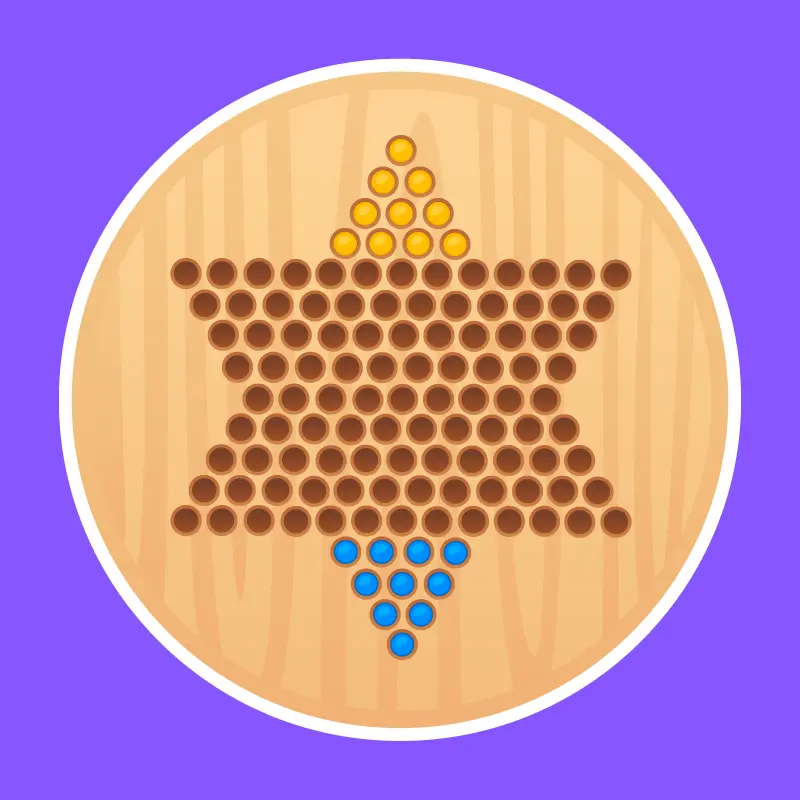
In a two player game, players must start with their pegs in opposite triangles.
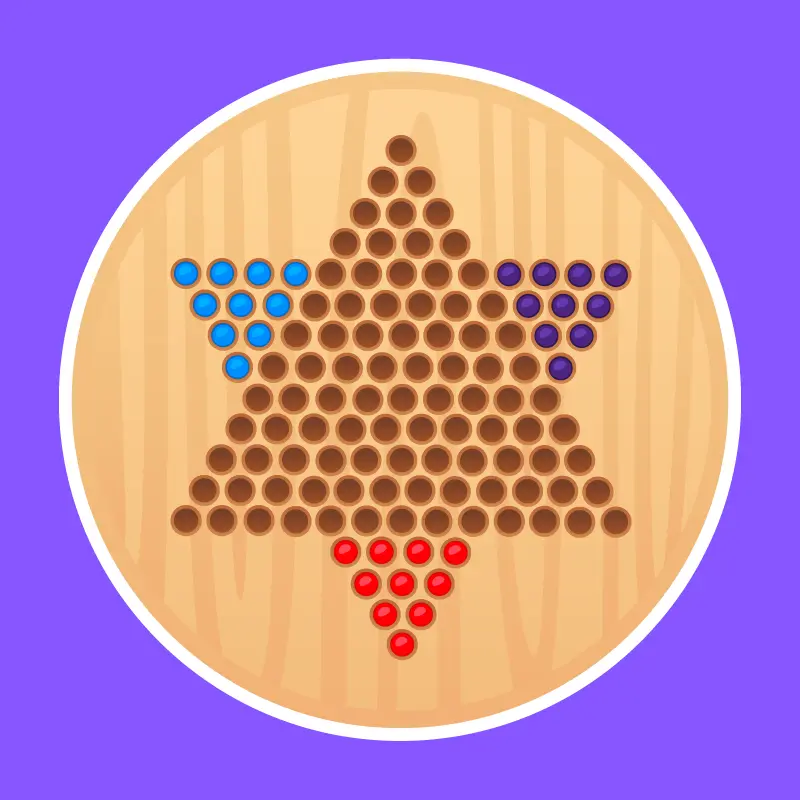
In a three player game, players begin on every other triangle.
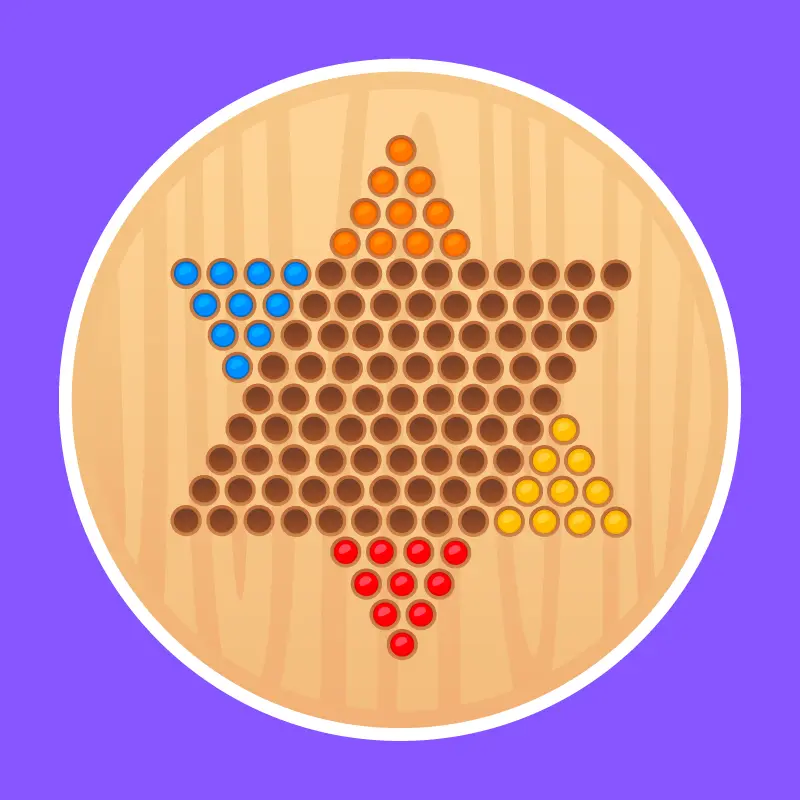
In a four player game, players pick two opposing pairs of triangles to start.
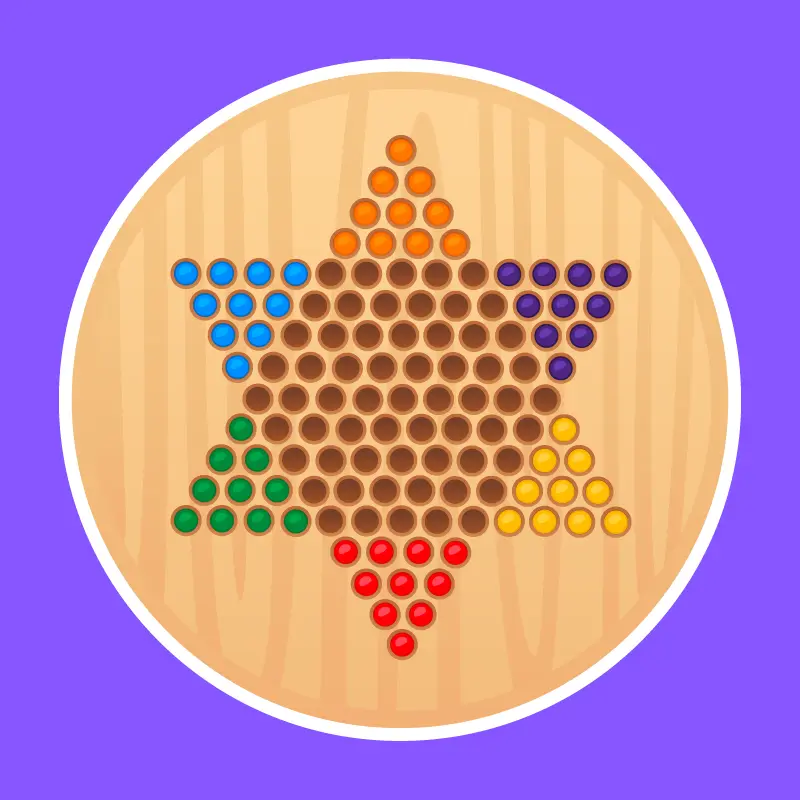
In a six player game, players use all the triangles.
Objective
The objective of Chinese Checkers is to be the first player to transfer all of their marbles into their designated home triangle.
Gameplay
Chinese Checkers is all about marble movement. Let’s detail the different moves possible:
- Single Moves: Marbles can be moved one space at a time by sliding the marble to an adjacent empty space.
- Jump Moves: These moves allow marbles to leap over other marbles to land on the empty space on the other side. However, jumps can only be made over a single marble, and the jumping marble must land in a straight line with the marble it jumped over.
To conquer a game of Chinese Checkers, you’ll need to be strategic. You have to consider your moves and anticipate what other players might do next. Consider blocking opponents’ paths and create chains of jumps to get ahead quicker than your opponents.
The first player to successfully transfer all of their marbles into their home triangle wins the game of Chinese Checkers. Once a player gets to their home triangle, they are no longer involved in the game. The remaining players continue to compete for the second, third, fourth, or sixth positions.
Endgame
Chinese Checkers comes to an end once the first player has moved their marbles into their home triangle. Optionally, in a multiplayer scenario, players can keep playing to see who comes in second, third, and so on depending on the number of players.
Example / Demonstration
Let’s walk through an example of Chinese Checkers gameplay, detailing the first ten moves as it is quite a lengthy game.
- Player 1 with blue marbles moves one of their marbles from the top-right corner of their starting triangle to the empty space directly below it.
- Player 2 with red marbles moves one of their marbles from the bottom-right corner of their starting triangle to the empty space directly below it.
- Player 1 jumps over one of their own marbles, landing in the empty space two spaces below their starting triangle.
- Player 2 moves one of their marbles from the bottom-left corner of their starting triangle to the empty space directly below it.
- Player 1 moves one of their marbles one space to the right, closer to their home triangle.
- Player 2 jumps over one of their own marbles, landing in the empty space two spaces below their starting triangle.
- Player 1 jumps over one of Player 2’s marbles, landing in the empty space directly below Player 2’s starting triangle.
- Player 2 moves one of their marbles one space to the left, closer to their home triangle.
- Player 1 moves one of their marbles one space to the right, closer to their home triangle.
- Player 2 jumps over Player 1’s marble that was just moved, landing in the empty space directly below Player 1’s starting triangle.
Tips & Strategy
- Jumping marbles early in the game can give you a huge advantage to move towards your goal quicker.
- Blocking your opponents’ paths can hinder their progress and create opportunities for you to advance, instead. Use your marbles to obstruct opponents’ movement to gain an edge.
- Chaining jumps, where you jump multiple marbles in a single turn, can be effective in advancing your marbles towards your home triangle.
-
FAQs
How is Chinese Checkers different from regular Checkers?
Chinese Checkers and regular Checkers share the same basic concept, but differ in terms of board layout, number of players, movement rules, objective, and strategic depth.
Can you move backwards in Chinese Checkers?
Players can move their marbles in any direction, forwards or backwards, one hole at a time.
Affiliate Disclaimer
We may earn a commision through links on this page.